Mid-Season Rice Update
I would like to call this a midseason rice update, but in actuality we have rice in Mississippi ranging from one leaf to late boot in places, but most of the rice crop should be at or reaching mid-season. Similar

I would like to call this a midseason rice update, but in actuality we have rice in Mississippi ranging from one leaf to late boot in places, but most of the rice crop should be at or reaching mid-season. Similar
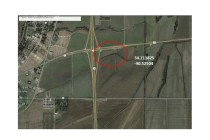
An agronomic crops field day will be held at Cliff Heaton farms, just east of the intersection of Highway 61 and Highway 6. The field day will be held in the cotton field on the south side of the road. MSU Extension Specialists will be present to discuss topics in corn, cotton, grain sorghum, peanut, rice and soybean.
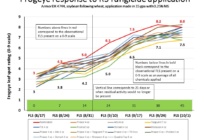
Questions continue regarding fungicide products to be used at the R3/R4 application timing. The most important decisions should be made based on the specific variety planted in each field since frogeye leaf spot is resistant to the strobilurin class of fungicides meaning that stand-alone strobilurin products are no longer effective against the disease. See the information contained within this blog post regarding fungicide products, effective rates of products in pre-mix combinations and the effectiveness of some fungicides on managing frogeye leaf spot.
Posted June 16, 2015. The low pressure in the Gulf has turned into tropical storm Bill. It is now predicted to impact the coast further south than it was several days ago. Updated forecasts by NOAA indicate that the primary
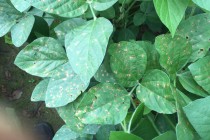
Choosing a foliar fungicide product for either a common fungicide application at a specific growth stage in the absence of foliar disease or in the presence of disease should be based on the soybean variety planted. Widespread fungicide resistance to the strobilurin fungicides in the MS soybean production system within the frogeye leaf spot fungal population may ultimately change how we use fungicides. Choose a fungicide product based on whether or not frogeye will occur in a susceptible variety rather than choosing a fungicide based on price.
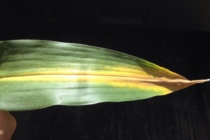
More growers are implementing different “tassel shot” inputs as part of their corn management program. Wet weather and other issues may further complicate application timing of such inputs. This article discusses whether specific timing makes a big difference or not?
The MSU-DREC Rice Producer Field Day will be held in conjunction with the annual Mississippi Farm Bureau Federation Summer Rice Grower Meeting this year on the afternoon of July 30 at the Capps Center in Stoneville.. The Farm Bureau meeting
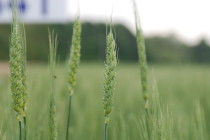
For the most part the Mississippi wheat crop is clean with regards to foliar diseases. However, some important issues are occurring that need to be addressed with regards to Fusarium head blight, stem maggot feeding, and general herbicide injury as these three issues can easily be confused with one another at the field level.
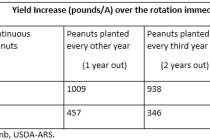
While we wait for the fields to dry up enough to get the 2015 planting season underway, here are a few peanut-related issues to pay attention to going into the season. – Jason Sarver • Inoculant usage continues to be
Updated Tuesday March 10, 2015. Added several new fungicides to the pdf file;Mar.16.update2.azoxystrobin Strobe 2L which has a comprehensive label for field crops, vegetables, turf, and ornamentals. Trevo, (22.9% Azoxystrobin, for use on corn, cotton, rice, and soybeans). Updated Tuesday March
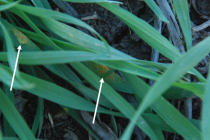
Stripe rust was detected in wheat in Washington County, MS in the wheat variety trial plots. Wheat fields in MS should be scouted at this time for the presence of stripe rust. Fungicide applications with products in the triazole (DMI) class of fungicides will prevent spread of the disease and in some cases where the disease has occurred and been observed in a wheat field may protect yield.
Find attached the agenda for the 42nd Annual Delta Ag Expo to be held in Cleveland, MS on Wednesday, January 21 and Thursday, January 22, 2015. We hope to see you in attendance at the Bolivar County Ag Expo Center.
Green stem disorder can be a sporadic issue from year-to-year and field-to-field. In the current blog post a survey is attached whereby individuals can answer five basic questions on their thoughts and opinions regarding the presence of green stem.
The 2014 Delta area/Bolivar Co. Rice Meeting will be held at the Bolivar Co. Extension office on December 4, 2014. Mississippi rice producers, industry professionals, and other interested parties are invited to listen to presentations from MSU research and Extension
Foliar diseases of soybean continue to be observed throughout the MS soybean production area. At present, no soybean rust has been detected in MS; however, Cercospora blight and frogeye leaf spot as well as several pod diseases (topic of the next blog post) are being observed in numerous soybean fields.
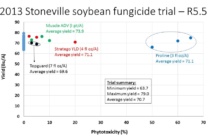
Phytotoxicity, associated with the application of some specific foliar fungicide products, has been observed in numerous commercial soybean fields again this season. Keep in mind that the symptoms associated with fungicide phytotoxicity will appear quite similar to sudden death syndrome (SDS). However, SDS only occurs in light soil classes. When scouting fields, keep in mind that an entire field with SDS-like symptoms might be the result of fungicide phytotoxicity, thus not a disease after all.
Diseases of soybean continue to be observed throughout the MS production system. At present, soybean rust has not been detected within MS; however, we continue to scout for the presence of rust, as well as additional diseases of economic importance throughout sentinel plots as well as commercial soybean fields. Frogeye leaf spot, sudden death syndrome, stem canker, and aerial blight continue to be hot topics for most soybean farmers.
Soybean diseases continue to be observed throughout MS. Brown spot, aerial web blight, frogeye leaf spot, Cercospora blight are the predominant foliar diseases observed at present. In addition, several root diseases are becoming apparent from fields across the state.
Southern corn rust continues to be observed throughout MS. We continue to receive calls regarding late fungicide applications (> R4/R5) to reduce yield losses attributed to southern rust. Numerous myths regarding the disease have been widely spread throughout the MS corn production area including death of a corn plant in as fast as 7 days following southern rust infection and lodging as a result of heavy southern rust infection.
The North Mississippi Research and Extension Center’s Agronomic Row Crops Field Day on Thursday, August 7 will present the latest research to the area’s row-crop farmers and consultants. The field day will be from 8 a.m. to 1:30 p.m. at the Lee County Agri-Center Magnolia Conference Center on Highway 145 South in Verona.
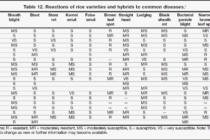
Last week’s weather pattern in the Delta provided near perfect conditions for rice blast (Pyricularia grisea) to occur. Rice blast is generally categorized by the plant part infected (e.g., leaf, neck, panicle). Blast favors mild humid weather, frequent rainfall, and
Yesterday we found our first southern blight* damage to peanuts for 2014. The timing is not unusual, we generally start finding the disease when the crop canopy closes. What is unusual is where on the plants the disease was found.
Foliar diseases of soybean continue to be observed throughout the state. At present, no soybean rust has been detected in Mississippi. However, aerial web blight, downy mildew, frogeye leaf spot, and target spot have all been observed in light to severe situations depending on field location.
Foliar corn diseases continue to be observed throughout MS. Even though common rust, gray leaf spot, northern corn leaf blight, and southern corn leaf blight continue to be observed at low levels, additional diseases have been encountered over the past two weeks.
Numerous fungicide trials were conducted during the 2013 season to determine the effectiveness of some popular commercially available fungicides on managing frogeye leaf spot. Attached find data as related to some R5 and one R5.5 fungicide application on a frogeye leaf spot susceptible Maturity Group IV variety in Stoneville (4 trials) and Starkville (1 trial).

© 2023 Copyright Mississippi Crops. All Rights reserved.
